

Pamela Natasha Bugembe
- March 2, 2026
LAYING THE FOUNDATION.
The brain is the brain, psychology is psychology and diagnosis is diagnosis, and yes, mental health is often presented as universal. But human beings do not exist outside culture. If anything, we suffer in cultural contexts.
Across Africa, a concept once whispered is now stepping into the open. Mental Health awareness is rising, Campaigns are multiplying, Mental health clinics are expanding and the language of global psychiatry is becoming familiar. To this we pause a question: Is Mental Health an African concept? What does healing look like through the African Lens? How do we unlearn what does not serve us in order to create what does?
But first, I’ll define.
Africanising mental health is re-imagining, reshaping and grounding mental health theory and practise so that it reflects African histories, cultures, philosophies, languages and lived realities. Simply put, it is to reclaim the right to define healing on our own terms.
It is NOT a rejection of psychology or science. It also is NOT abandoning clinical care, therapy, medication or dismissing evidence-based interventions.
Africanising mental health is not a rejection of existing systems but an extension of them.
This series is not just a collection of fiercely passionate articles written by myself, it is a reawakening.
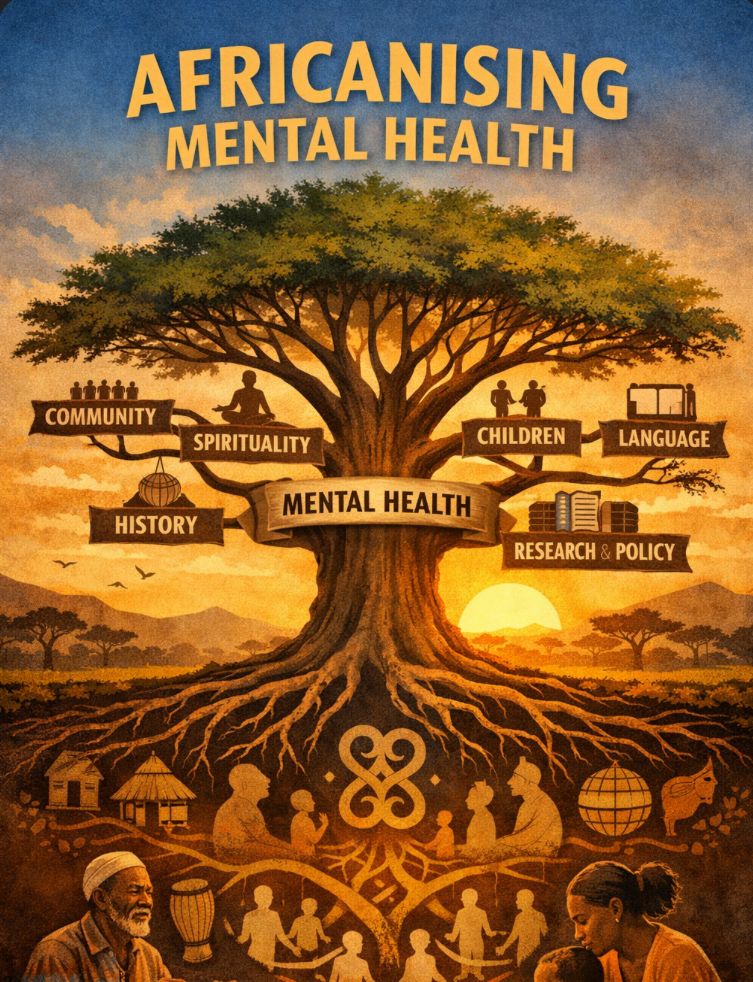
In eight parts we will journey through the foundations of Africanising mental health: listening to philosophies we were born into, questioning frameworks we have inherited, re-examining what healing has meant on this continent long before modern clinics arrived, and sifting through stigma around mental health and building a system forward on which it thrives in our continent. We will delve through community, spirituality, childhood, language and idioms, history, gender and systems- not as separate topics but as interconnected threads in the fabric of African life. Afya ya akili (swahili), Embeera yobwongo (luganda) to mean health / well-being of the mind and many more will be surfacing.
Africa is not just a consumer of psychological knowledge but also a producer of it. To quote Chinua Achebe “Until the lions have their own historians, the history of the hunt will always glorify the hunter”. If mental health is meant to restore well-being, to which it is, then what does that look like in African Concepts? What would our systems become if they truly reflected our identities? And are we ready to build them? And that’s a journey just beginning and yet worth exploring.
PAMELA NATASHA BUGEMBE